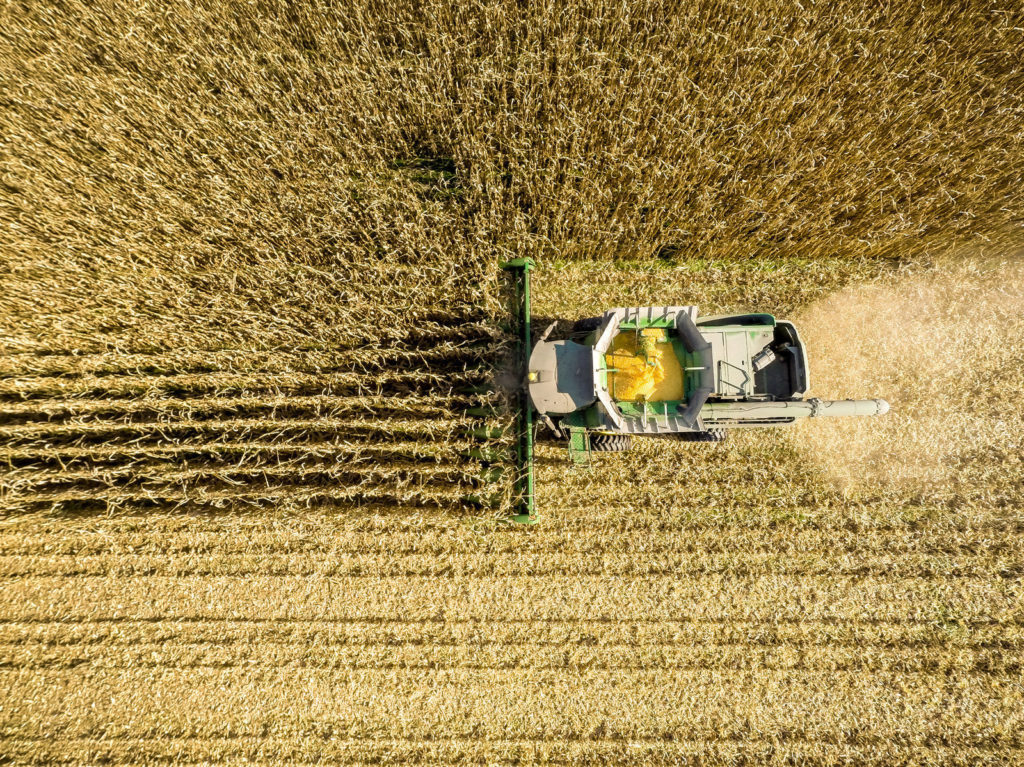
The Rising Risks — and Opportunities — Confronting Global Agriculture
In part I of a two-part essay, Michael Ferrari and Parag Khanna examine the dramatic shifts impacting the global agriculture industry from supply chain disruption to the Belt and Road Initiative to new technologies. In Part II they examine some of the physical risks that will accompany BRI expansion, and offer thoughts on the future agricultural supply chain.
'Whose black box do you trust?' good discussion on the rational fears and concerns re:AI.
Accountability should be higher priority. Deep fakes, etc...
If we don't know what is 'true' how do we trust AI with respect to recommendations
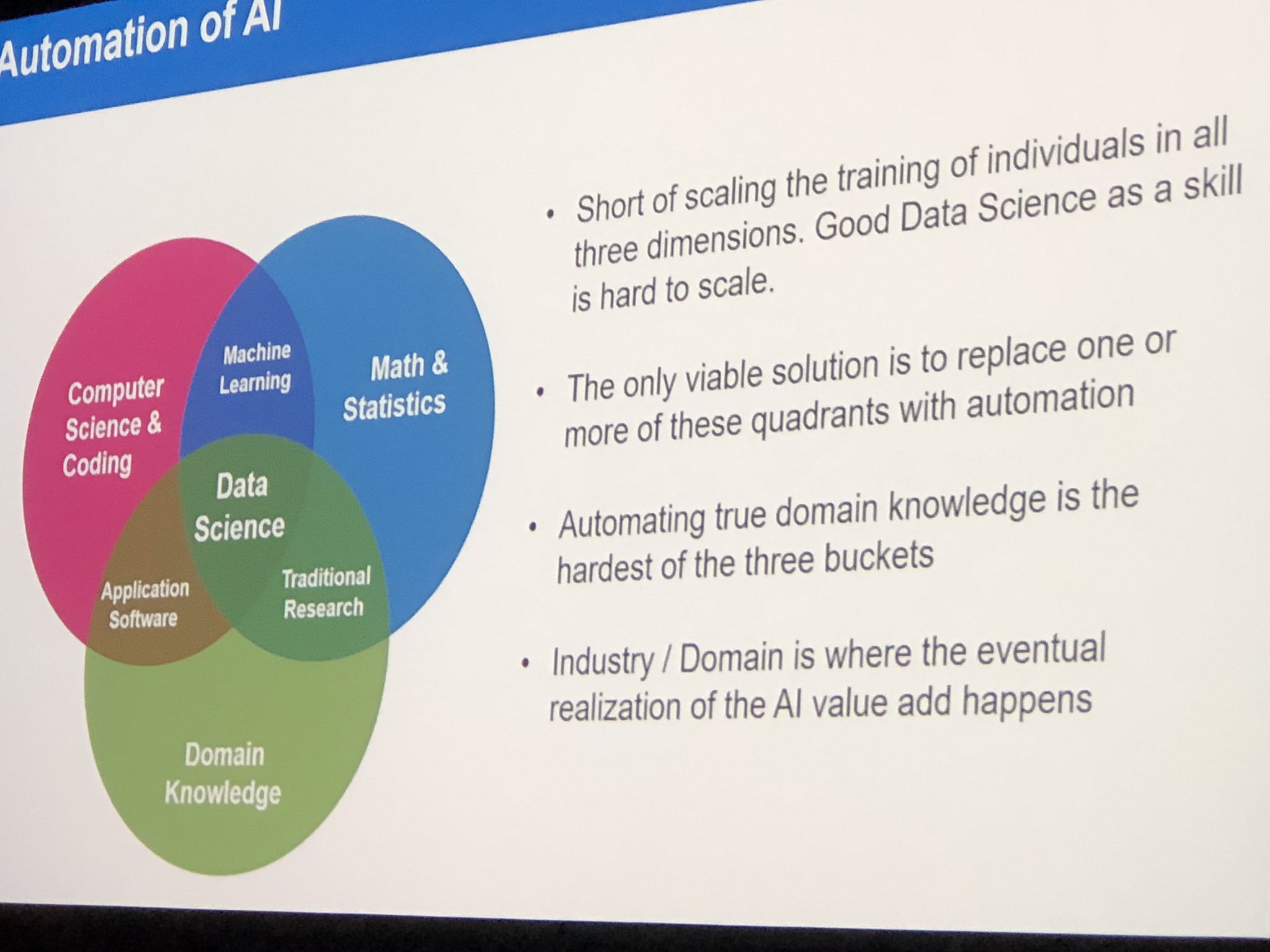
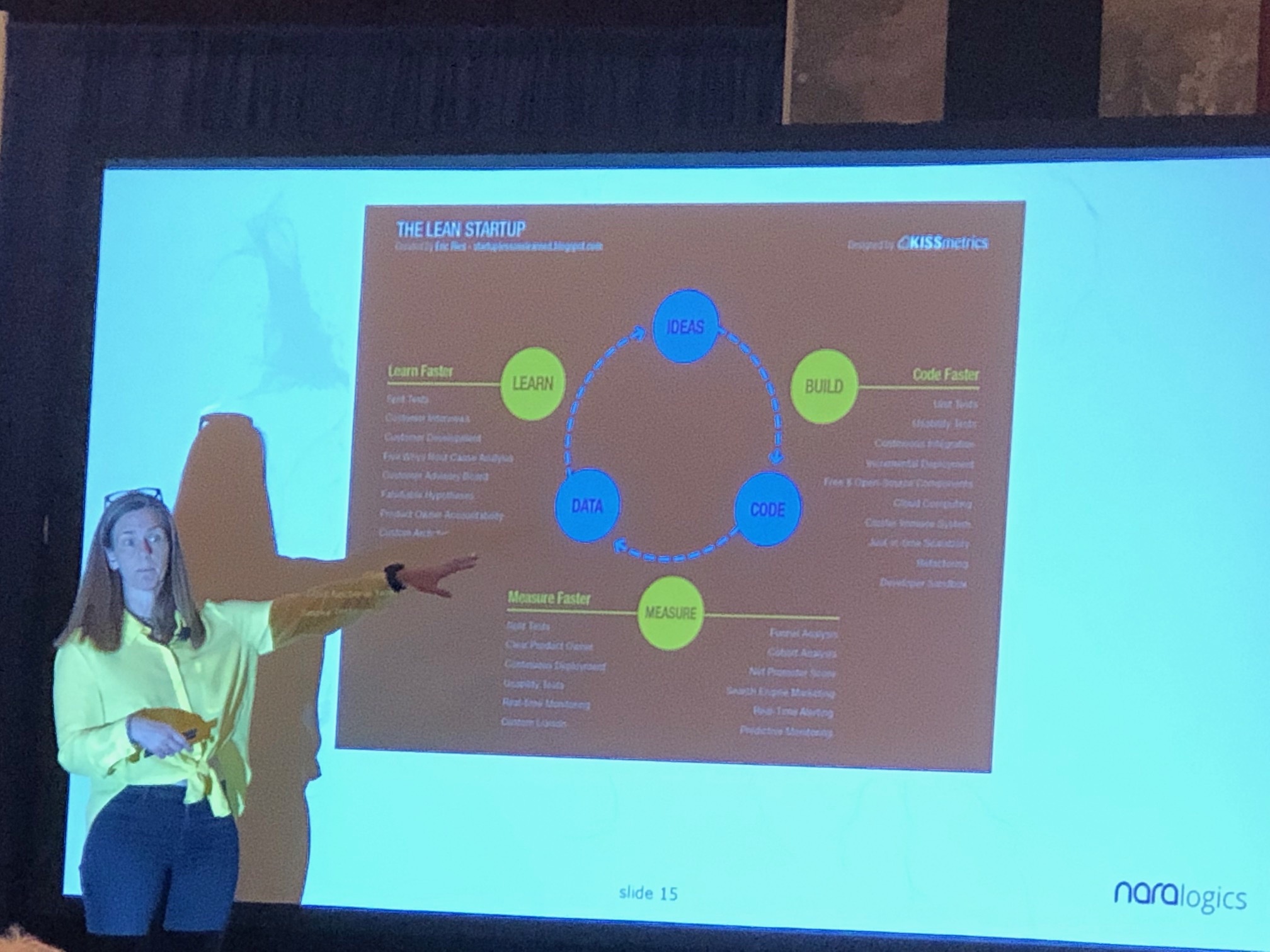
Talk highlights points raised in Puri's talk - using example of computational chemistry, biological extrapolation & neural nets/deep learning. Need time for exploratory analysis, and also expert systems to guide algo development
Shift from 'Big Data' to doing real science in data science (my par)
What could you do with all of the weather data in the world? DarkSky example. Great to see weather data, and what we would/could/should do with Wx data in the AI discussion
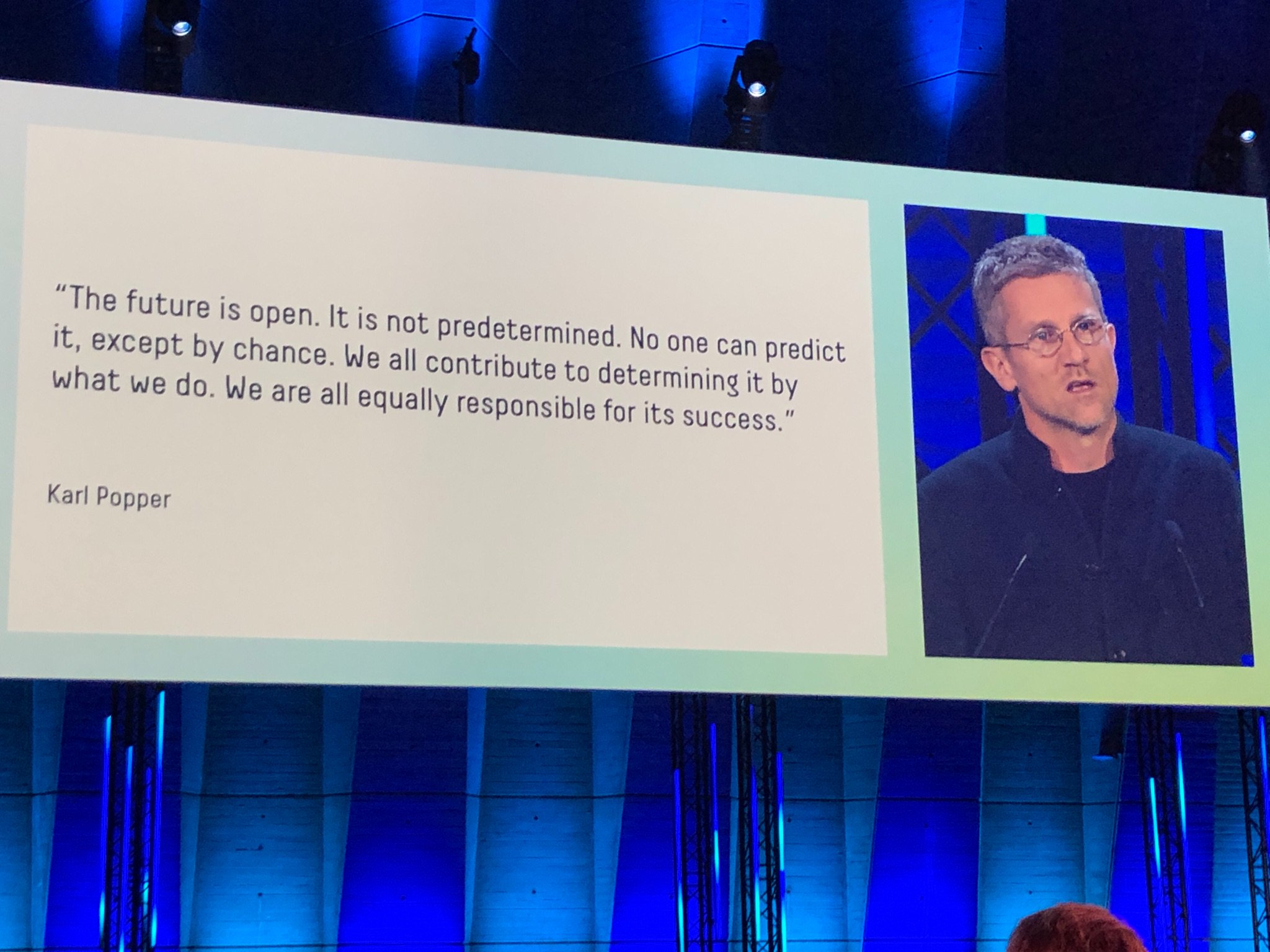
Overall good talks & discussions throughout the day, but my biggest concern, as it always is when dealing with AI, DS, ML & related topics, is that we think that we can predict better with more precision in all verticals, that we are good/getting better wrt causal inference, and that more/faster/granular data = 'better predictions'. Need to be mindful that more precision = more risk. It is perhaps timely that Carlo Ratti of MIT Senseable City Lab giving a talk at a separate conference, quotes Popper, calling for a slightly different approach to AI in the context of cities:
Models still have utility, but we should use as a guide to explore possibilities, and always quantify risk. The use AI & suite of associated tools/methods should help us prepare for, shape, and better react (the future), rather than predict. Robust methodologies are better suited for engineered systems that build in protection through redundancy (mimics evolution) rather than solutions dependent upon human behavior.
EV: 2% of global auto sales last year. C.Zoi suggests this will change dramatically over next 5-10 yrs; here outlook is a function of demand for charging stations (EVgo).
Refreshing to hear a politician talk sense re: Green New Deal, Jay Inslee governor of WA
Inslee raised several good points wrt both science & market potential, although I don’t think he was supportive enough re: nuclear
EM panel: timely -discussion of Belt&Road Initiative. (next paper…BRI/sustainability)
can’t underestimate impact of China. (2+26…is it working?)
discussion in India: air pollution as a proxy of economic health? innovation? clean air driver for energy transition. price & affordability biggest issues…can it be met w clean nrg? linking needs of poor to clean nrg transition US (unsurprisingly) does not understand disparities
As expected, emerging market panel most interesting. usually the case when practitioners driving discussion
Chatterjee: power-sector emissions at 1990 levels, market-driven (fact check)
later than I expected. AI (& blockchain) first mentioned at 11:33 (Goldman)
Low carbon transition panel (starting to) scratch the surface in innovation and trade
Before you switch your carnivorous diet to minimize the environmental impact of meat consumption, read this npr article and the referenced nature sustainability publication which highlight a growing externality associated with conventional agriculture. There has been a lot of talk about the grains/oilseeds/air pollution connection, but not much with actual targets. The article references a quantitative study which focuses on the life cycle of conventional corn, which includes a discussion with metrics concerning the human costs resulting from pollution, dispersion transport and disruption of biogeochemical cycling. In my opinion this should be part of a true ESG measure.
More on this to come…ties into some of the broader global themes thatParag& I will be discussing in a forthcoming article.
The following is an excerpt from a forthcoming article that I will be publishing with my colleague and collaborator Parag Khanna, author of the new book The Future is Asian. Check back for the full article shortly.
China’s ‘New Silk Road’, or the more commonly used moniker, Belt and Road Initiative (BRI) aims to transform global trade and establish new commercial partnerships across a broad transect of industrial operating sectors. The backbone of the initiative involves the development and expansion of an ambitious infrastructure network which touches 84 countries, encompassing land and marine shipping and distribution channels, pipelines, power plants and ports, railways and roads, and more, on a scale never seen before. The New Silk Road will become increasingly important as we attempt to figure out how to feed, shelter, and provide sustainable energy to a growing population with a larger appetite for higher value products. As nations determine whether or not they will visibly support or refrain from the initiative, two themes are starting to surface as they pertain to our evolving interconnected economy: (1) countries may not actually have a choice regarding whether or not they will partner with the BRI, and (2) from both a supply and demand perspective, the global weighting of the US may prove to be less significant than it once was. This will begin to challenge long held perceptions and beliefs about the global economy, and models of how and where goods circulate to and from will need a revision.
Regardless of how the Initiative pans out for the participants and the spectators, it is a near certainty that the traditional global supply network will be at least moderately overhauled, resulting in significant ramifications for producers of material and commodity goods. In the razor-thin margin businesses associated with specialty and bulk commodity production and distribution, those players who do not adapt will likely not survive. When we talk of commodities in this discussion, we are generally referring to the agricultural component consisting of anything that is grown, harvested, extracted, processed, and transformed into any one of many end-user products. Generally, these products can be converted for the consumer into either food, fiber, energy, materials or in some cases a form of currency. In this paper, we go deeper into impact of the Belt and Road Initiative as it relates to the potential disruption to all industries affected by the basket of commodity products that comprise the agriculture complex.
The global agricultural commodity network, perhaps more than any other commercial endeavor, can arguably hold the distinctive position sitting at the cornerstone of global economic activity. At the most basic level. everyone needs to be nourished, otherwise they die. While that sounds dire, it is not an exaggeration. But agriculture, and the global agribusiness juggernaut, is more than ‘just’ food. When we take a broader view of agriculture, we start to include all of the suppliers, distributors, processing facilities, fertilizer manufacturers, chemical input providers, forestry companies, pulp plants, solid waste facilities, transportation conglomerates, and many others, into our supply and demand balance sheets. Taking this a step further, many industries that do not immediately come to mind but are largely dependent upon agriculture for raw materials include pharmaceuticals, energy generation, paper manufacturers, pet food makers, the housing and construction sector, ice cream factories, and the cosmetics sector. The point here is not to list every product that includes something that is harvested from the Earth’s soil; rather, it is to demonstrate that as agriculture is the backbone of the economy for many countries and many more companies, changes to the enabling infrastructure which guides how these products are produced, shipped, sold and consumed will likely spill over into just about every sector and subsector of global business.
What does the expansion of the New Silk Road mean for global agriculture stocks and flows? How will the BRI foster or mitigate emerging threats to food supply-side dynamics? Check back to read the full article (to be published shortly) addressing how the BRI will influence the regional and global agricultural commodity trade.
In the field of applied risk and hazard research, it seems that there is always a teachable moment.
Whether it is the news concerning the devastating aftermath and loss of life from Cyclone Idai (MODIS image pictured) in Mozambique, Malawi and Zimbabwe, severe flooding affecting homes, lives, crops and livestock in Centre-South Braziland the Central US, the impacts of drought on industry in Australia, India and Ukraine, or poor urban air quality in Delhi and Shenzhen, the importance of understanding and preparing for severe events which originate in the atmosphere should be top of mind. And these are just a few of the many types of aero-geophysical occurrences, which can subtly or acutely affect nearly all aspects of modern societal life. Atmospheric and geophysical perils such as these can exert both positive and negative impacts to human, economic and social systems, ranging in scale from sub-zip code to multiple countries across multiple continents. But 24-hour news cycles and ubiquitous weather information notwithstanding, there is still a widespread lack of preparedness for these events evident across the domestic and commercial landscape, which typically results in severe unfavorable outcomes.
When we think of the spectrum of potential risks, one of the primary differences with geophysical risks as compared with other types of exposures with ‘on-the-ground’ origins, is that the atmosphere and the ocean (and the sun) do not respect boundaries other than those governed by the principles embedded in fluid dynamics. Floods and droughts do not stop their progress at country borders. Severe heat and cold will not respect who does/does not have access to air conditioning or heating. Solar flares impact entire hemispheres. Water follows the path of least resistance, with deficits and surpluses more a function of geography than of economics or demographics. As these categories of atmospheric events are impacting countless lives on a daily basis, directly or indirectly, most people and businesses are not prepared to react once a forcing event is in motion. Therefore, for those of us involved in the physics-side of extreme event research and risk management, including the associated human impacts, we should use this as an opportunity to communicate the importance of preparedness and early action, as lives, structures and economies are all vulnerable to disruption.
Despite the combined best efforts of scientists, government agencies and the public and private sectors, in any given month of any given year, we can look at an extreme event somewhere on the planet and learn how to better identify, quantify and communicate hazard risk to the relevant stakeholders. For every life, dollar or structure saved, there is always more that can be done. More entities within the risk community should look to emulate the efforts of researchers/practitioners such as Dr. Marshall Shepherd, Paul Walsh, and Dr. Ryan Maue (to name a few) as examples of professionals who take the time to explain what we know, and more importantly what we don’t know, regarding the mechanics, the range of potential impacts and uncertainty with respect to pending physical hazards. In addition to the individuals, we must also rely on the efforts of the underlying technology and communications corporations, including Planet, Indigo, IBM/The Weather Company, Jupiter Intelligence, and Riskpulse, that are gathering, processing and disseminating models and data in real-time, and putting much of this in the public domain. We have come a long way over the last two decades, regarding risk identification, communication, and information transfer. Given the nature and the severity of impending weather, water, climate and geophysical risks against the backdrop of a growing and more interconnected global population, there is still much more to be done.
Contact Atlas Research Innovations to receive a copy of the technical paper associated with this post, and to learn more about how your organization can take advantage of the next wave in physical and financial risk management.
Interesting job post at Bucknell: Director, Sustainable Technology Program
The Director of the Sustainable Technology Program at the Bucknell Center for Sustainability and the Environment (BCSE) provides leadership and management of all activities associated with sustainable technology research, programs and related projects. The Director will provide oversight in areas of their expertise as diverse as climate variability and change, renewable energy technologies, climate change mitigation, permaculture, or eco-landscaping, and supports related efforts within the BCSE and the University at large. This role oversees program staff and works collaboratively with the BCSE’s Faculty Director, other Program Directors and BCSE Staff, affiliated Faculty and Faculty Associates. This full-time, 10 month, benefits eligible position reports to the Faculty Director of the BCSE.
Duties and Responsibilities:
Leadership and Vision: Provides intellectual leadership, creativity and innovation to the many interdisciplinary projects and activities defined broadly in terms of climate variability and change, climate change mitigation, renewable energy (solar, wind, geothermal, hydro, biomass, etc.), and permaculture technologies. Works with faculty, staff, and students to develop and implement innovative programs, projects, and activities.
Collaboration: Actively collaborates with other CSE colleagues, faculty, and students to contribute to the continuing development of the sustainable technology program and the growth of the CSE.
Project Management: Provides creative vision for and administers all sustainable technology projects and related activities. Types of activities in this area include, but are not limited to: program visioning, project management, grant development and management, events organizing, logistics, outreach, and meeting facilitation.
Budget Management: Coordinates and administers all sustainable technology program budgets. Types of activities in this area include, but are not limited to: preparing annual budget requests, tracking revenues and expenditures, and grant budget reporting.
Strategic Planning: Coordinates and administers ongoing strategic planning activities related to the sustainable technology program, including but not limited to: convening collaborative visioning exercises, developing/revising strategic planning materials relating to sustainable technology, meetings, monitoring progress of sustainable technology projects/activities, conducting assessment activities, and preparing annual work plans and progress reports on projects/activities.
Grant-making and Extra-mural Funding: Provides intellectual leadership for and coordination of all aspects of grant making related to obtaining financial support for sustainable technology programming from diverse internal and external sources.
Communications: Provides creative vision for all aspects of communications related to sustainable technology, including website design and maintenance, email, blog update, social media outreach messaging, printed materials, among any others. Assures consistency of all communications for the program with CSE strategic plan and Center communications strategy
Professional Networks: Develops and maintains cross-disciplinary professional networks that advance the objectives of the sustainable technology program. Encourages and supports cross-disciplinary interactions among faculty, students, and staff related to sustainable technology. Attends conferences, workshops, and similar events relevant to the objectives of sustainable technology. Serves as a liaison for faculty, staff, and students on related CSE projects and activities. Periodically convenes faculty and staff affiliated with the sustainable technology program.
Teaching and Learning Support: May offer one course (or the equivalent of one credit) in support of the objectives of the sustainable technology program, given approval by relevant academic department(s). Supports development of Integrated Perspectives (IP), Environmental Connections (EVCN), or other courses relevant to the objectives of the sustainable technology program.
Student/Faculty Research and Project Support: Recruits and mentors student interns and researchers for sustainable technology projects and related activities. Provides logistical support for faculty and student projects/activities associated with the sustainable technology program.
Outreach: Represent the CSE Program as needed at diverse university events including but not limited to: university admissions events, alumni events, prospective student visits, as well as other relevant activities/programs. Convenes meetings of internal and external partners and constituents associated with CSE, sustainable technology, etc. such as the Renewable Energy Scholars.
Minimum Qualifications:
• Ph.D. or doctorate degree in a relevant field of study and at least two years of experience in higher education.
• Demonstrated commitment to diversity and inclusiveness.
• Demonstrated interest and broad expertise in climate change, renewable energy technology, sustainable design, with the ability to teach classes and mentor student researchers.
• Demonstrated strong organizational and communication skills.
• Ability to manage complex multi-partner projects in campus and regional settings.
Preferred Qualifications:
• Recognized leadership in societies in their area of specialty (regional, national, etc.)
• Professional licensure in area of specialty (such as E.I.T., P.E., etc.)
When we look across the spectrum of technological and societal endeavors which are connected to both the largest challenges facing humanity, as well as to some of the largest potential commercial opportunities, we need not look any further than the (dining) table. Food and fiber are simply the cornerstone of society, from local to global scale. Perhaps lyricist/poet Robert Hunter* said it best — we alldo need to eat. At the most foundational level, if the business and technology worlds are going to attempt to sustain a healthy planet, a healthy population and a healthy global economy, the complimentary initiatives should be placed on fostering a systems approach towards agriculture, as it literally touches every one of us.
Meeting the nutritional needs of a growing population that is on pace to reach 10 billion by 2050 will not be easy. Fragility of supply chains, emerging diseases, weather disruptions, contagion risk, lack of water in key origins…these are only a handful of the many challenges facing the global agricultural value chain, and it is important to note here that the discussion should not be solely one of food security. Taking a systems approach, what we really should be striving towards is the concept of nutrition security. As my former Mars colleague Howard Shapiro has very successfully emphasized and communicated over the years, many of the calories that feed the world today are simply empty calories; caloric intake with no nutritional benefit. If we are attempt to talk about food security in the 21st century seriously, the dialogue must shift to embrace the holistic concept of nutrition systems security.
Expanding on this idea a little further, it follows that large scale centralized agriculture, which leads to regional monoculture, simply does not work over time. Despite the best efforts from the food production/processing, biotechnology and chemical industries, diminishing crop biodiversity via traditional monoculture in the long run promotes development of agricultural disease, depletion of soil nutrients and productivity capacity, stress on water tables (particularly where deep-rooted varieties are dominant) and systemic crop risk, as well as the inhibition of food choices. Each of these topics will be addressed in greater depth in future papers, but it is worth stating that a systems approach applied to how food is selected, grown, processed and distributed will not only promote agricultural biodiversity and market participation, but it will also enhance nutritional and quite possibly societal security.
Over the last two decades, I have worked closely with just about every sector across the agricultural value chain. This diverse group includes suppliers, producers, traders, consumer goods corps, co-ops, distributors, breeders, chemical manufacturers, and many others. It is extremely difficult, if not nearly impossible, to name another sector with reach across as many sub-sectors as the food and beverage complex. Global agriculture, perhaps more than any other operating sector, is a complicated and complex business and as a result, no problems can be tackled nor can solutions be generated via traditional discipline-specific silos. For Global Ag to work, and to evolve to meet societal needs of the coming decades, it must adopt a decentralized approach built upon a systems foundation.
Systems Agriculture: Technology Considerations
(Image courtesy of MIT Media Lab OpenAG)
In recent years, the food industry has witnessed a rise in technology companies that are looking to the laboratory for new ways to assist in feeding the planet, while at the same time minimizing environmental impact. This is a reaction to what can be traced to both supply and demand side pressures in global agriculture. To take one example, synthetic biology has made great progress in R&D, potentially bringing to market commercially viable substitute protein products which satisfy the demands of the carnivore, minus the ethical, environmental and economic externalities commonly associated with traditional livestock production. Another example with potential upside can be seen in the burgeoning indoor or controlled-environment agriculture sector. Here we have also seen a rise in supply-side activity, both in the traditional the startup community, as well as in the corporate venture space. These and the many other ‘alternative agriculture’ tools and technologies are most certainly welcome pieces to the puzzle, and I feel that they will have a growing place in the portfolio of tools needed to address Agri decentralization. However, at least in the short term, in aggregate, the suite of new market entrants will still occupy a niche with respect to the global industrial agriculture stage.
Most of what we consume has been and will continue to be derived through relatively traditional plant and animal harvesting, via means which have not changed all that much since agricultural and livestock domestication, some of which date back to the transition into the Holocene. Simplistically, seeds are planted, and this is followed by watering, nourishing, harvesting, in some cases processing, and ultimately their products are consumed. Similarly, while livestock husbandry has been effectively industrialized and scaled, the general series of events associated with the lifecycle of protein harvesting has not changed very much. So while I expect all of the new players in the Food2.0 world to contribute a steadily increasing percentage of global food and nutrition requirements, most of the world’s efforts will continue to improve upon what we perceive as traditional agricultural practices. When it comes to food and agriculture, society is still largely at the mercy of Mother Nature. Drought tolerant varieties and developments in field applications notwithstanding, to put it simply, if it doesn’t rain there is no grain.
Systems Agriculture Solutions: Physical Resource Theory
(Image courtesy of Chalmers University)
For all of the reasons mentioned above, viewing global agriculture through the lens of complex systems is not only preferable, but actually necessary if we are to realistically assess the risks, opportunities, and potential developments that come to mind as we address the growing challenges associated with global nutrition security. This ensemble of variables encompasses all of the components across the entire agricultural value chain, comprised of dozens upon dozens of industries where the physical and life sciences are so tightly coupled with global commerce. As a result of the complex nature of global food, the application of Physical Resource Theory (PRT) as a means to assess what can be grown, at what rates, under what environmental conditions, and above all with commercially and socioeconomically equitable outcomes, is an appropriate platform on which to build a tangible transition to Food2.0.
Sustainable application of PRT as it is applied to global food production is predicated upon the understanding of both biophysical energy transfer from source to (edible) product, as well as capital transfer between supplier, producer and consumer. The biophysics and economics of resource production can not be divorced from one another, although many of the more traditional agricultural ‘models’ tend to just focus on only one half of the problem. A complex systems/PRT framework more effectively weaves together considerations related to crop potential and market potential through a series of stocks, flows, transformations and transactions, and will ultimately lead to more robust planning and sustainable solutions. When we analyze global agriculture, we can do so in the same manner that the biologist examines the behavior of the cell. Observation reveals a collection of processes dealing with energetics, transfer, competition and cooperation, each agent performing a function that spills over and affects their neighbor, and somehow all of this machinery comes together to result in a functioning cell embedded within a larger operating system. So by definition and going to the roots of complexity science, the cell as a whole IS more than the sum of its parts, and the emergent behaviors that have evolved allow the larger scale systems to perform efficiently. Taking the industrial biological metaphor from micro to macro, the same concepts can be constructed into a ‘model’ that can guide the evolution of systematic benefits to global agriculture. Competition is of course encouraged, but this can and should be balanced with cooperation incentives as a means to ‘open-source’ benefits to the larger system. We have seen this approach work in software, genomics, computational and data sciences, and it is starting to take hold in energy and transportation. Agriculture should be next.
Driven by economics, the waste from one industry becomes the feedstock for another. Diversity leads to not only system strength, but also system resilience. This interplay among agents actually becomes an indirect form of systemic risk management in the face of disruptions where the catalyst could be climate, disease, geopolitics, sanctions, or any number of other external forces. To be clear, all of this does in fact occur to some degree, but a more comprehensive and concentrated effort among market ‘agents’ is needed for systemic PRT to scale.
To extend the Chalmers University PRT definition and framework to the global agricultural complex, effective implementation and maximum potential system benefit will reside at the decentralized intersection of technology, society, nature, commerce and culture. The favorable transition from physical/biophysical/economic theory to practice will result in a higher quality of life for consumers (nutrition security), sustainable business models for market agents (commercial security), and biosystem resilience and productivity (natural security).
Additional technical papers addressing the ideas presented here will follow.
— — — — — — — — — — — —
At Atlas Research Innovations, we look to the network sciences, geospatial analysis and the evolution of technologies for guidance and risk management in the new economy. Along with our network partners we will be publishing articles related to the global commodity trade, applied science and technology, and the manufacturing complex, while embedding principles and developments which promote Industrial Ecology integration across the agriculture, energy and materials complex.
Geography, Environment, and Systems Sustainability
The elusive search for favorable and uncorrelated returns across asset classes has pushed investors in recent years into the space of alternative data, with the hopes of discovering new, untapped sources of information that can be acquired, analyzed and transformed into a sustainable market advantage. This occurs in financial services through the trader’s ongoing quest for new sources of alpha, as well as in the private equity/venture capital arena, where investors are looking for differentiated and scalable ideas that will become the companies of tomorrow. In either case, new data is accompanied by new investable themes, and one theme which has been gaining in popularity falls under the Environmental, Social & Governance, or ESG, umbrella. ESG has been around in some fashion for decades, but to date it has been more marketing than substance. Further, upon closer examination of what comprises most ESG efforts, we see that it carries very little true meaning as it relates to financial performance or to true environmentally responsible investing. Therefore, it is time to rebrand ‘ESG’ as ‘GESS’ and with this will come an approach towards investing with a more technical and global purview: the updated GESS should focus on investable themes that complement one another to connect companies, natural and industrial ecosystems, and markets under the moniker of Geography, Environment, and Systems Sustainability.
The rise of ESG themes, as well as the funds marketing these themes to prospective clients, highlights the need to explore investable ideas that demonstrate a return while also providing a hedge against corrupt business practices. However, when we look closer at how these measures are generated and quantified, many of today’s ESG scores are largely assigned based on factors related to softer criteria. Some of these include the strength of the leadership team, higher-level emissions data released through disclosures, public perception, number of fines/citations, supplier certifications, etc. The majority of these are subjective measures, or they are benchmarked against a baseline with little meaning. In any case, they also do not assess how a company operates within the larger system of multi-continental industries, where regulatory measures span many jurisdictions. In contrast, a truly meaningful GESS strategy grounded in actual (physical, chemical, ecological) data related to industrial output proxies can uncover a more representative suite of characteristics related to how sectors and companies perform, how they can be scored, and ultimately how they rank. For the purposes of building a new definition of strategies that benefit both economy and environment, a framework for the ESG to GESS transformation should contain the following elements:
Geography: Rather than focusing on single companies and their upstream suppliers, fundamental analysts should develop a read on the operations of a company as examined through a global geographic lens. As supply chains have become global, single-country origins are not as meaningful as they once were; supplier networks become more important than country of origin. This new geography also takes into account both social and physical characteristics of commerce, including trade routes and partners, biogeochemical and climatic cycles impacting raw material sourcing, foreign exchange exposures and geopolitical implications of trade, resource use and cooperation.
Environment: How do we define the true environmental performance of a company? How do they lead in environmental performance with respect their operating sector? Today, ESG analysis looks at 5–10 year plans, and how companies improve against in-house benchmarks. This tends to become arbitrary at best, sandbagging at worst. Looking at an accurate and representative environmental footprint of a company requires not only assessing progressive changes in emissions reductions which are linear, but also step changes in efficiency technology adaptation around managing waste, raw material spend, and use of alternatives, all of which carry exponential benefits.
Systems: Pulling from the complexity sciences, a systems approach looks at agents within a system and examines how they operate in concert with one another, how they evolve, and how new properties emerge. Taking this application to the examination of industrial ecosystems, a holistic systems approach will look at how agents within a sector influence behavior of cohorts, emergent inter and intra-sector properties, and the impact of incentives and disruptors. This approach also lends itself to borrowing algorithms from the evolutionary sciences, leading to new tools for examining systemic risk, something sorely needed in traditional ESG analysis.
Sustainability: G+E+S=S. A revamped measure of sustainability, therefore, is a synthesis of the three components described above. Sustainable investments, and the businesses that they represent, will take all three of these components into account, and this also will allow for a unique view when attempting to compare companies in different sectors — something that proves to be quite difficult under current ESG methodology.
As the GESS framework evolves, the information and insights generated will serve as raw material for both fundamental and quantitative investors. This should in turn increase both the depth and breadth of the data and methods that will be used to assess environmental and economic potential and performance. In addition, we should see a demand catalyst for technology/data transfer, as Universities, National Laboratories, and startups germinated in academia are searching for more avenues to apply research and technology findings. Hopefully, the data-as-a-service model will stimulate incentives for all types of scientific data, typically not the domain of investors.
Future articles will take a deeper look at specific examples where scientific data coupled with a systems approach can generate insights regarding micro and macro behavior as it relates to firms, sectors and economies. This should be of interest to investors, analysts and possibly most importantly, risk managers.
Feel free to contact Atlas Research Innovations to learn more.
Today (Feb 11) should be on the calendar for a few reasons. We recognize National Inventor’s Day, (not to be confused with Inventor’s Day) celebrating contributions from the likes of the Wright Brothers, Thomas Edison, Hedy Lamar, Nikola Tesla, and George Washington Carver, among others. This date also happens to be the birthday of Edison. But February 11 is also recognized globally as the International Day of Women and Girls in Science (IDWGS). Science and technology move fast, with the gap between idea and application becoming ever shorter. Understanding how science and technology are shaping our lives, and more importantly, appreciating the risks involved with their application, is particularly important in 2019. Therefore, commercial sector science should take advantage of the IDWGS as a platform to close the Science Technology, Engineering & Mathematics (STEM) gender gap for several reasons.
First, 2019’s theme is “Investment in Women and Girls in Science for Inclusive Green Growth.” The need to develop pathways to stimulate global economic growth grounded in science, which are equally distributed when viewed measured with both economic and environmental objectives, needs no further discussion.
Second, the total number of PhDs earned by women in the US were once again greater than the number earned by men in 2017* with many fields being split relatively evenly. However, in the STEM fields of Engineering, Physical Science and Mathematics/Computer Science, conferred degrees are still heavily skewed male. To be clear, I do not view a PhD as a gatekeeper to a career in science; this is just one data point to support the larger statement. We don’t need commissioned reports to confirm this. Think of the last scientific or technical conference you attended. What was the gender distribution, both in terms of speakers and attendees? If a conference panel was not specifically marketed under the banner of ‘Increasing Diversity’, what was the percentage of female participants?
Third, nearly all aspects of modern life are increasingly predicated on advances in science and technology, and the speed at which this transition has taken place over the last two decades is nothing short of astounding. AI. CRISPR. GPS. Commercially viable EV. NewSpace. VR/AR. The list goes on. What is clear is that the research and development of tools, methods and technologies which were the subject of uncountable PhD theses not long ago are now, literally, embedded into commerce, retail, energy, food, transportation healthcare and more; the lines between the laboratory and society have become blurred. Understanding how these pervasive technologies function, break, repair and evenly distribute will require a more scientifically literate public. What’s more, what once passed for science fiction is now part of the fabric of society. Managing risk without both (a) a deeper understanding of how technology development and transfer works, and (b) an appreciation of possible risks, is, as Carl Sagan so eloquently stated, a recipe for disaster.
Finally, there is a growing sentiment that even many scientists do not really understand science very well. Simplistic replication of studies and misuse of statistics are both commonplace. Following the scientific method should illuminate more about what we don’t know, rather than confirm what is accepted. Risk management, therefore, is then embedded into the thought process when designing an experiment. I think the commercial sector gets this. When decentralized experimentation is fully embraced and distributed systems are fostered, good things happen.
Creating the Future
‘The best way to predict the future is to create it’. Some attribute this quote to Abraham Lincoln (who incidentally shares a birthday tomorrow with Charles Darwin). Others claim it came from Peter Drucker. Regardless of the statement’s origin, when we look at the scientific, societal and economic challenges facing a world with 7.7 billion inhabitants, the current importance of this statement can not be understated. It should also be noted that science is not a zero-sum game. Inclusive science, particularly with a commercial origin, has the opportunity to engage and serve everyone. Commercial opportunities in STEM are also inherently interdisciplinary, particularly appealing to those who are intrigued by figuring out how the world works from a variety of perspectives. It is now common to see evolutionary science underpinning theories in finance, physics-derived applications in biology (and vice versa), and computer science driving advances in geospatial sciences. With advances in computational resources, sharing of data and methods, and open-sourced technology, ‘science’ can start to be viewed as a verb, as opposed to an occupation. As such, as a society we cannot afford to limit our technological potential by not making STEM opportunities available and attractive for half of the world’s population. Further, the effort to encourage more females to take up STEM careers is not just for traditional students. Refer to IBM’s successful STEM Re-Entry program (which I helped pilot and have written about before) to see how mid-career professionals can transition to careers in science and technology, regardless of their formal educational training.
Science is hard. It is also time consuming. And there are no shortcuts. Real science is also quantitative, so equally important to your scientific field(s) of interest, is the ability to represent ideas and support them numerically, extracting signal from noise. This is precisely why the STEM fields are so engaging, and ripe with opportunity. Whatever your interest is, looking at the world through the STEM lens can provide a path to tackle an infinite number of problems, and the prospect of turning your passion into a career has never been higher, serving the world in the process.
With the evolving global economic, environmental and geopolitical landscape officially placing us in the age of the Anthropocene, it is as important as it ever to recognize the contributions of female scientists, engineers, inventors and entrepreneurs, and provide opportunities for more to follow. As I (frequently) resort to one of the many yellow-paged Carl Sagan books on my shelf for inspiration, I feel that he put it best, and we are wise to heed his words.
“We’ve arranged a global civilization in which most crucial elements profoundly depend on science and technology. We have also arranged things so that almost no one understands science and technology. This is a prescription for disaster. We might get away with it for a while, but sooner or later this combustible mixture of ignorance and power is going to blow up in our faces.”
― Carl Sagan, The Demon-Haunted World: Science as a Candle in the Dark